Sixty-one. That's how many six-packs of annuals I used to plant along the front of our house every May, according to a receipt from 2019 I found in the green notebook. Petunias, impatiens, begonias, a border of marigolds. It took two full weekends to plant and most of the summer to water, and it all died at the first frost in October.
This year I planted zero annuals in the front beds. Well, almost zero. I have two pots by the front step, because I'm not made of stone.
Why I changed it
Our front yard is not big. The house sits on a quarter acre, but most of that is the back. In front we have a bed about 40 feet long along the foundation, a smaller bed around the mailbox, and a bed around the old maple near the street. Total, about 400 square feet of planting area.
For twenty-some years I treated that space like a seasonal display. I enjoyed it. But I'm 56 now, my knees aren't what they were, and watering annuals in a July heat wave at 7:00 every evening has stopped being relaxing. I also did the math, which is what I do. Between flats, potting soil and fertilizer I was spending around $240 every spring on plants that lasted five months, plus a noticeable bump in the summer water bill.
We've also decided we want to stay in this house a long time. So I wanted beds I could keep up at 60 and 70, not just this year.
What I planted instead
The idea was simple: perennials that come back every year, can handle our clay soil and humid summers, and don't need me to fuss with them. I asked the Hendersons, who have the nicest yard on our street, and took a lot of their advice. Patti also gave me plants, which helped the budget.
Here's what went in:
- Hostas along the shady north end of the foundation bed: nine plants. Six were divisions from Patti, three I bought for $11 each.
- Daylilies along the sunny south end and around the mailbox: twelve plants, mostly the reblooming yellow kind, $8 each in a sale pack.
- Three boxwoods near the front step for some green all winter: $22 each.
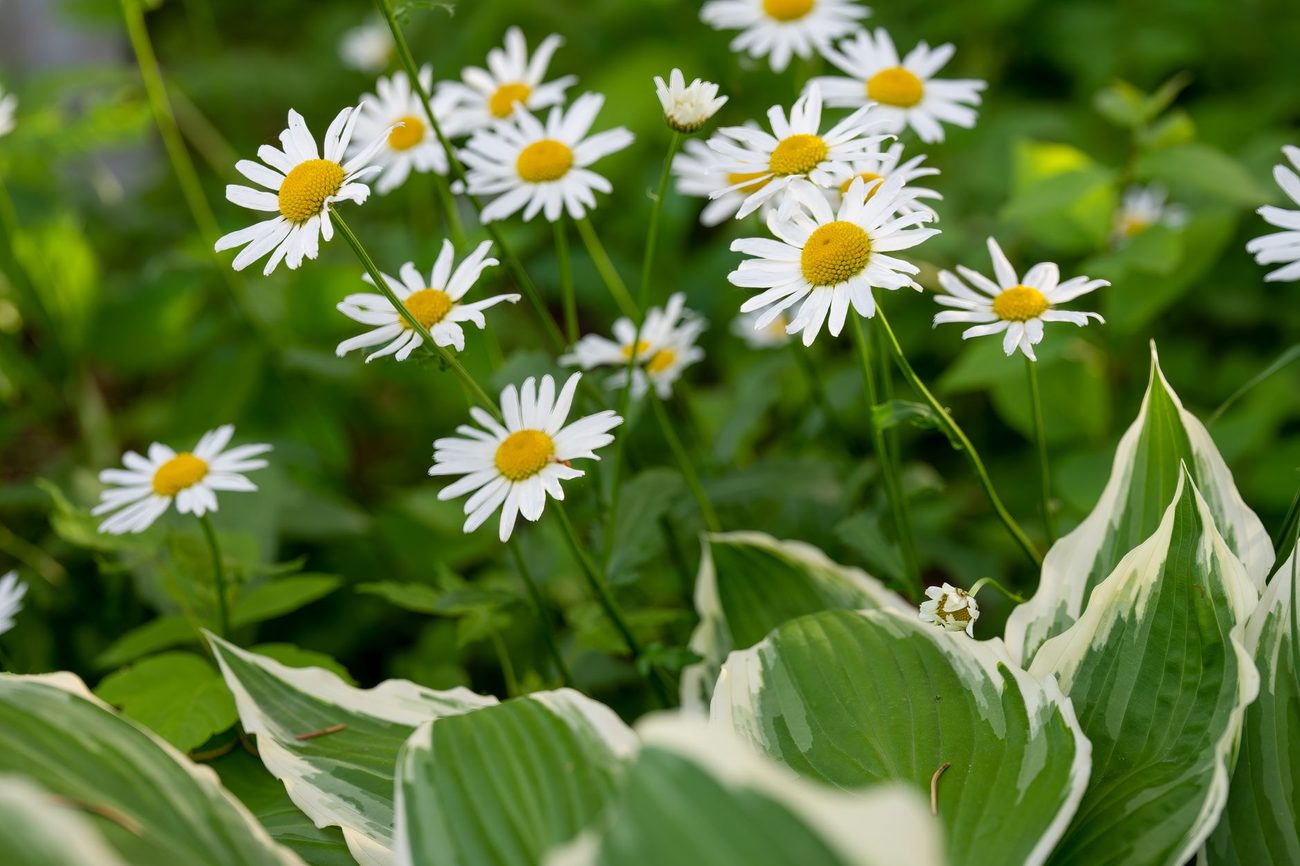
- Coneflowers and black-eyed Susans around the maple: eight plants, $7 each, plus some from Patti.
- Two hydrangeas at the corners of the house: $34 each.
Plant total: about $356. That's more than one year of annuals, but these will come back, and in three or four years I'll be dividing the hostas and daylilies and giving some away myself.
The mulch part
Mulch was the real work. I pulled up the old landscape fabric, which had become a tangled mess with weeds growing through and on top of it, and decided not to put new fabric down. Patti says it causes more problems than it solves, and having just pulled up twenty years of it, I agree.
Instead, after planting, I laid down several layers of newspaper and cardboard around the plants to smother weeds, then covered everything with about three inches of shredded hardwood mulch. We needed roughly four cubic yards. Bagged, that would have been about 54 bags. We had it delivered in bulk for $189 including delivery, which Greg spread with a wheelbarrow over two afternoons while I raked.
I asked Greg what he thought when he finished. He said, "It's brown." I'm told it will look better when the plants fill in.
What it costs to keep up
The point of all this is the years ahead, so here's my estimate for a normal year from now on:
Mulch refresh, about an inch on top every spring: maybe $80. A bit of cutting back in the fall, maybe four hours of work. Watering the new plants this first summer, then mostly leaving them alone after that, except in a real drought. Dividing plants every few years, which is free.
Compared to $240 and two weekends of planting every May, plus all that summer watering, it's a big difference. I'm guessing we save $150 a year and fifty or sixty hours of work.
I'll admit the beds look a little sparse right now. Young perennials do. Patti says the first year they sleep, the second year they creep, the third year they leap. I wrote that in the notebook too.
Josh graduated from UC two weeks ago, and when he saw the front yard he said, "Did you get rid of the flowers?" I said no, I got rid of the work. He laughed, then asked if he could take some of the leftover cardboard for moving boxes. Some things don't change.