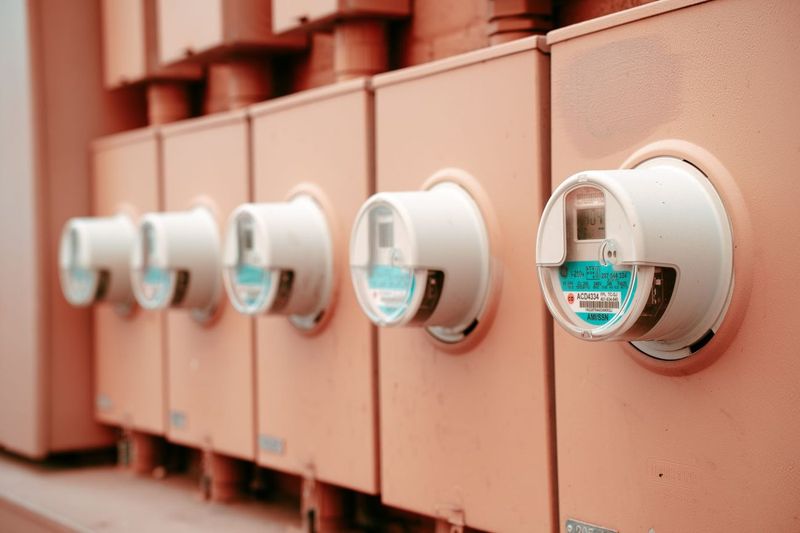
Saturday morning, 6:15, Greg already gone on his route and the house so quiet I could hear the refrigerator hum. I had my coffee, the laptop and the March electric bill with the "price to compare" circled in red pen. Ours said 10.6 cents per kilowatt-hour. My goal for the morning was to find out whether anyone would sell us electricity for less, and whether I could trust them.
A quick refresher, since I wrote about reading the bill back in March. In Ohio, our utility delivers the electricity and sends the bill no matter what. But the supply part, the actual electricity, can come from a supplier you choose. If you choose nobody, you stay on the utility's default supply at the price to compare.
Finding the chart
The state's utility commission, the PUCO, publishes a comparison chart called Apples to Apples. You pick electric or natural gas, pick your utility's service area, and it lists every supplier offer currently available there. I found it by searching for the name. It is plain-looking, and I mean that as a compliment.
Each row is one offer, and the columns tell you most of what matters:
- The rate in cents per kilowatt-hour
- Whether it is fixed or variable
- The term length in months
- Any early termination fee
- Any monthly fee
- Whether there is an introductory price, and what happens after
- The percent from renewable sources
That morning there were dozens of offers. Some of them looked wonderful until I read the next column over.
How I sorted it
My first rule was that I didn't want a variable rate. A variable rate can change every month, and the whole reason I'm doing this is to make our bills predictable before I leave my job in June. Several of the cheapest-looking rows were variable, including one at 7.9 cents for the first three months with no promise at all about month four. I crossed those out in the notebook.
My second rule was no monthly fee. A $4.99 monthly fee sounds small, but we use around 900 kilowatt-hours in an average month, so that fee adds more than half a cent per kilowatt-hour. A 9.0-cent offer with a fee is really closer to 9.6.
My third rule was to look at the termination fee in case we needed out. Some were $100 or more. Some were $25. A few had none.
After those three rules I had about eight offers left, all fixed, all 12 to 24 months. The 24-month ones were tempting but priced a bit higher, and I didn't want to guess two years out. We picked a 12-month fixed rate at 8.9 cents, no monthly fee, with a $25 early termination fee.
The arithmetic
From the green notebook, we used about 10,900 kilowatt-hours last year. The difference between 10.6 cents and 8.9 cents is 1.7 cents. So:
10,900 times $0.017 comes to about $185 a year.
That is not going to change our lives. But it is two months of our water bill, and all it cost me was a Saturday morning. Greg's reaction when he got home was, "Is it the same electricity?" Yes. Same wires, same outlets, same utility on the bill. Only the line that says generation changes.
What happened after I signed up
I enrolled directly on the supplier's own website, typing in the account number from my bill. A few days later we got a letter from our utility confirming the switch. That letter matters, because in Ohio you have a short window after it arrives, seven days, to cancel without penalty if you change your mind. I put the letter in the notebook.
The switch doesn't happen overnight. It takes effect with a meter reading, likely our read later this month, so our first full bill at the new rate should arrive in June. I'll check it line by line, of course.
A few things I'd pass along, as someone who is not an expert and figured this out on a Saturday:
Use the state's chart rather than whatever offer shows up in your mailbox. The chart shows everything side by side.
Read the term and what happens at the end. Most fixed contracts say what they renew into. Ours says I'll get a notice before it ends. I wrote the end month on the first page of the notebook so I'll remember.
And remember the price to compare can change, since the utility adjusts its default rate from time to time. A rate that saves money today may not in a year. That's another reason I liked 12 months.
Greg asked me what the trick was. There isn't one. It's a chart and a pencil.